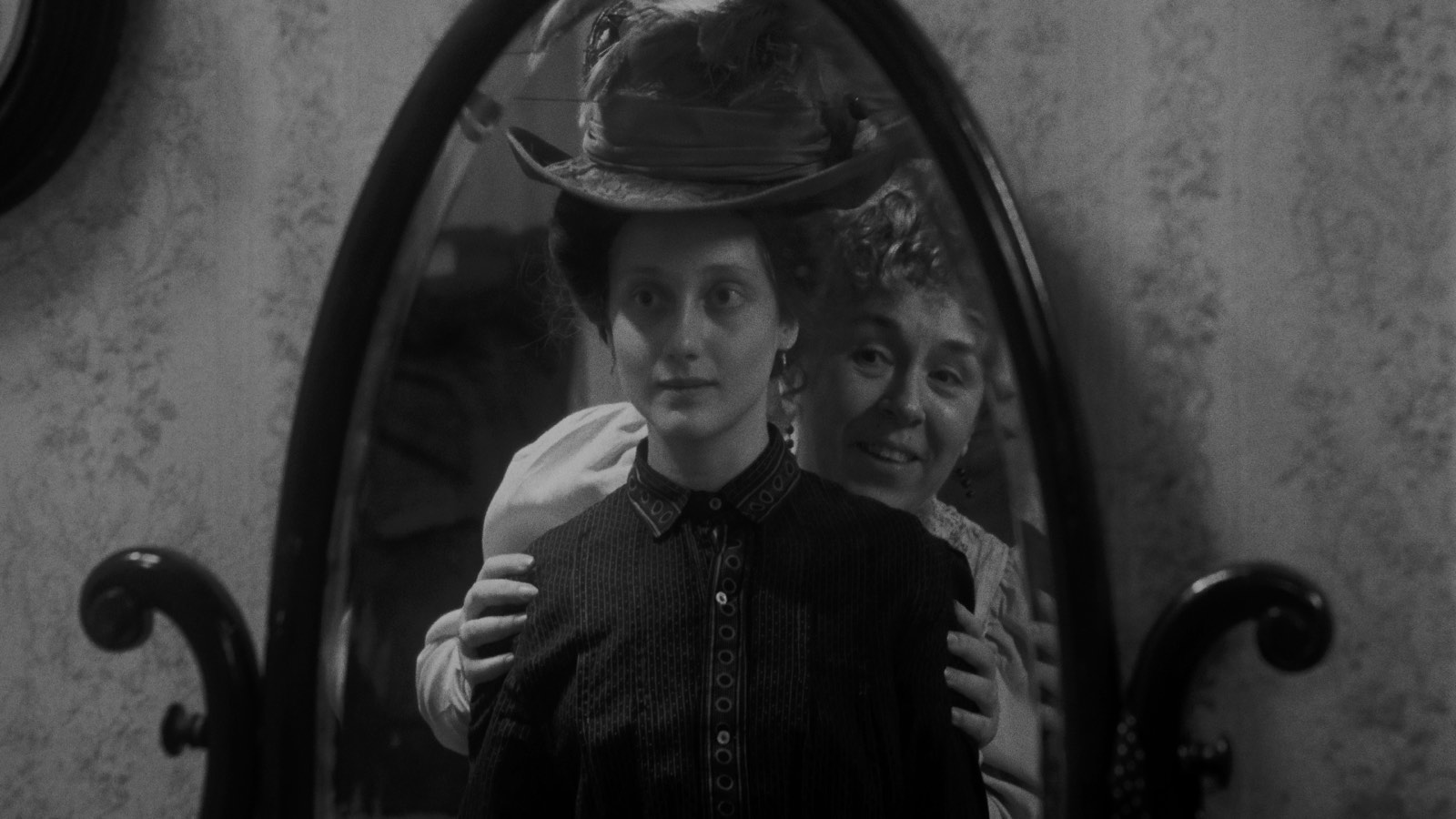
Hester Street, Joan Micklin Silver's tender exploration of the Jewish immigration experience, celebrates its 50th anniversary this year, and is available to book now on a new 4K DCP. Bookings of Hester Street are supported by marketing assets and the following brand new programme notes (also available in bespoke, print-friendly PDF) commissioned exclusively by Park Circus by Dr. Julia Wagner, author of BFI Film Classics: Hester Street.
Hester Street transports us to 1890s New York, where a swell of hopeful new immigrants grapples with American life. In Joan Micklin Silver’s 1975 debut feature film, exuberant Jake (Steven Keats) is determined to be ‘a regular Yankee’, whereas his newly-arrived wife, Gitl (Carol Kane), clings to the customs of European Yiddish life. Romantic and cultural conflicts are portrayed with warmth and sensitivity, and Carol Kane’s extraordinary performance as the wide-eyed young wife and mother earned her an Academy Award nomination. Now, 50 years since its first release, Hester Street has lost none of its charm.
Filmed in black and white, with a largely Yiddish script, a religiously observant Jewish woman in the lead and a woman writer-director at its helm, Hester Street is a rarity. Micklin Silver struggled to convince the movie industry to back the project, despite her previous success making short and educational films. While she saw her male counterparts ascend in their careers, Micklin Silver faced blatant sexism, even being told by a studio executive that ‘feature films are very expensive to mount and to distribute, and woman directors are one more problem we don’t need’. Responding to her despair at such rejection, Micklin Silver’s husband Raphael (then a property developer) turned his hand to raising the $350,000 initially needed, establishing Midwest Films to lead the independent production and its distribution when no one else had faith in its potential.
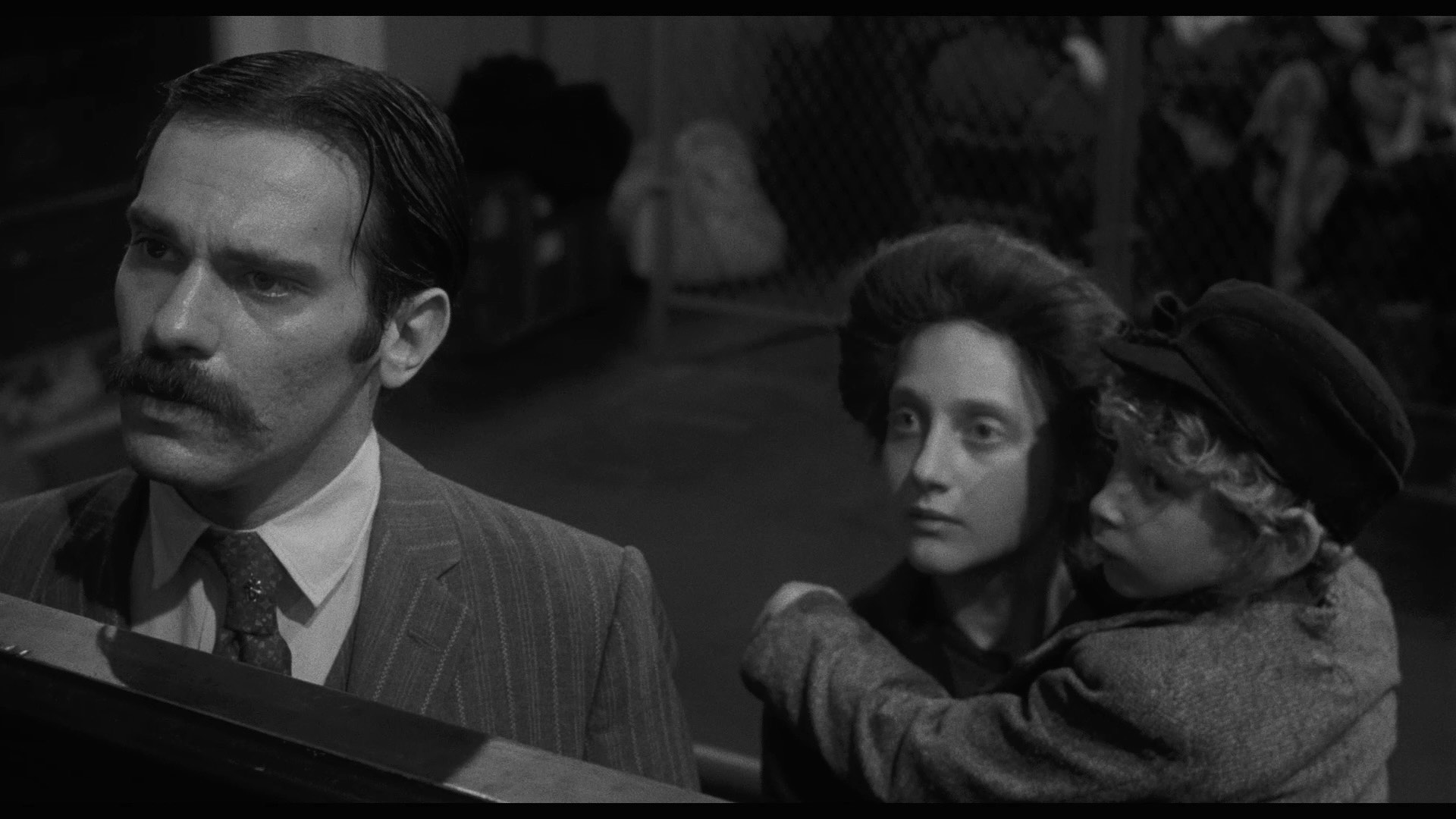
Image courtesy of Cohen Film Collection LLC
Aware that she may not have another opportunity to make a feature film if her debut were to fail, Micklin Silver committed to telling a story that honoured her parents’ experiences as immigrants from Russia. She adapted Yekl, an 1896 novella by prominent Yiddish-American writer Abraham Cahan, and in its 1970s reworking, Micklin Silver took a bold creative approach that shifted the perspective away from Jake (an anglicised name for Yekl) and focused instead on Gitl. By adopting the woman’s point of view and depicting her as an independent-minded, deep-feeling protagonist with agency, the filmmaker showed that both she and Gitl were forces to be reckoned with in patriarchal worlds.
Hester Street was an unexpected international critical and commercial success. Its universal themes of assimilation and compromise – and gentle romance – resonated with diverse audiences, proving wrong the sceptics who warned that it would appeal only to Jewish viewers. The skilful direction, stunning cinematography and strong performances brought extended runs, award nominations and $5 million at the box office.
The film conjures a way of life already long-dissipated by the 1970s, offering a vivid portrait of the Lower East Side and its beating heart, the market on Hester Street. Production Designer Stuart Wurtzel, who went on to have an illustrious Hollywood career, created the sets on a shoestring budget. Photographs taken of the neighbourhood in the 1890s inspired the black-and-white cinematography, led by Director of Photography Kenneth Van Sickle. A cast of entangled young lovers is supported by Doris Roberts as Mrs Kavarsky, the neighbour who dispenses Yiddish wisdom and wit: in Hester Street, the women get the last laugh.
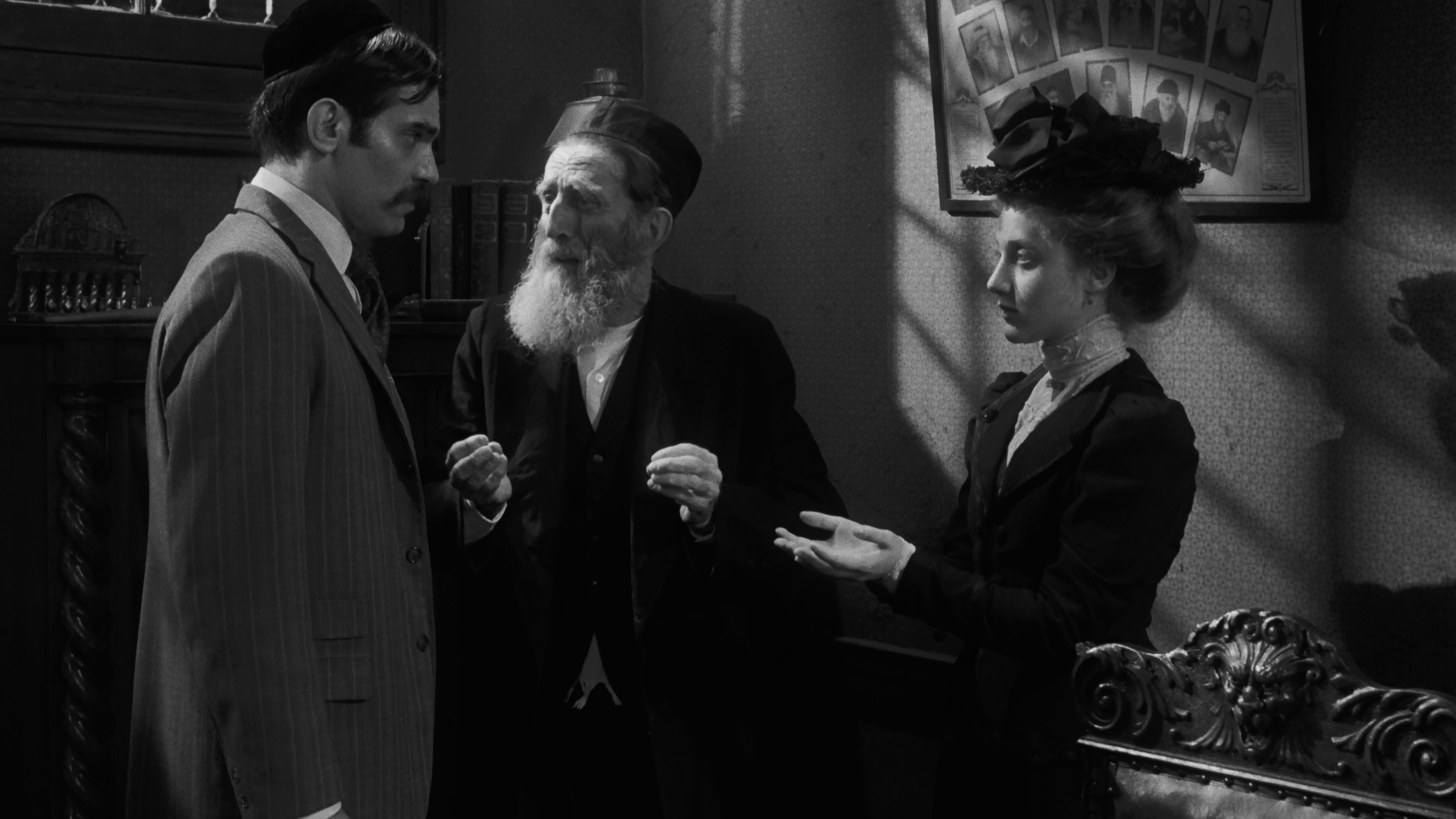
Image courtesy of Cohen Film Collection LLC
Hester Street is a landmark feminist film in many respects. Without a studio boss to answer to, Micklin Silver was afforded creative freedom to make unconventional stylistic choices, especially regarding portrayals of women. Once Gitl comes to New York, she becomes the lead character and Yiddish takes over as the dominant language until she learns English. Micklin Silver foregrounds Gitl’s development and growing inner-strength, particularly through close-ups on Kane’s face. In a 1975 New York Times review of Hester Street, Richard Eder perceived that ‘Miss Kane manages the high acting feat of seeming to change size physically, expanding and shrinking as she is happy or miserable’. At times, the force of Gitl’s gaze seems to direct the camera and propel the plot.
The success of Hester Street led to Hollywood opening its doors to Micklin Silver, although she still found that investors were reluctant take chances on the scripts which appealed to her. Steadfast in her desire to choose projects, her next feature film was again produced by Midwest Films: Between the Lines (1977) stars an unforgettable 24-year-old Jeff Goldblum in a young team working for a regional newspaper. The director was proving her talent for picking outstanding actors and eliciting impressive performances from them, as well as for supervising evocative musical soundtracks.
Micklin Silver directed, for PBS television, an adaptation of F. Scott Fitzgerald’s short story Bernice Bobs Her Hair (1976), with a superb Shelley Duvall in the title role. Head Over Heels, starring John Heard, flopped on its release in 1979 but eventually achieved greater success when re-released in 1983 as Chilly Scenes of Winter, Micklin Silver’s preferred title (matching the original novel) and, crucially, with the director’s cut ending. Crossing Delancey (1988) was Micklin Silver’s biggest hit, a romantic comedy that bears similarities to Hester Street, revisiting the same community decades later. Subsequent films include zany Loverboy (1989), starring Patrick Dempsey opposite Kirstie Alley and Carrie Fisher; teen drama Big Girls Don’t Cry… They Get Even (1991); and A Fish in the Bathtub (1998) that sees Mark Ruffalo co-starring with legendary comedy couple Anne Meara and Jerry Stiller.
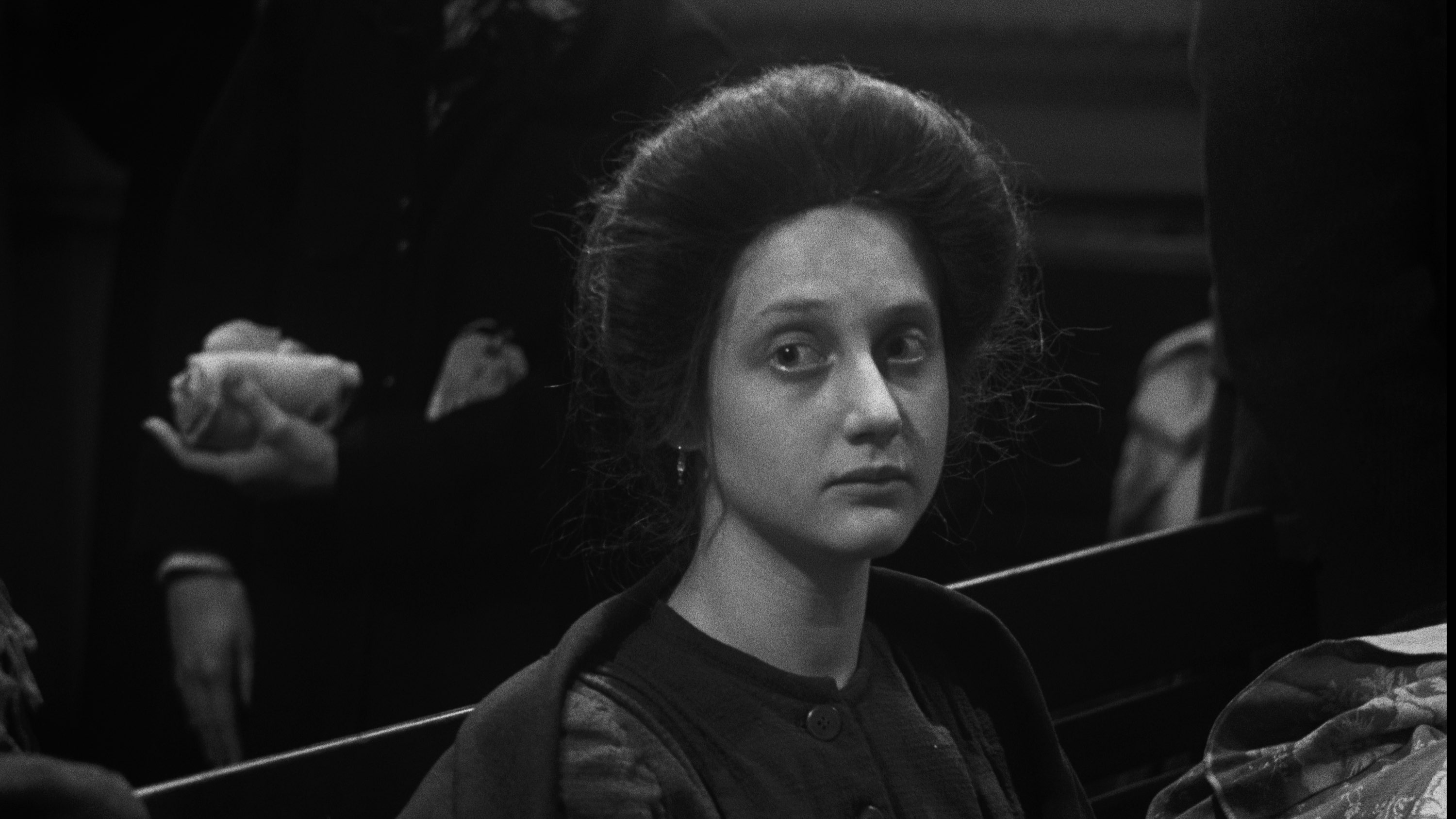
Image courtesy of Cohen Film Collection LLC
Joan Micklin Silver died aged 85 on 31 December 2020. Why is she not better known today? Perhaps she has been overlooked in many official histories of filmmaking because she did not fit squarely into an artistic or political movement. Or maybe clues lie in reviews of Hester Street on its 1975 release in the UK: most critics enjoyed the film but frequently also expressed antisemitic and misogynistic prejudice, both reflecting and shaping public opinion that may have impacted on the filmmaker’s reputation and legacy. However, recent years have seen more positive attention given to films directed by women, including the release of new digital restorations of several by Micklin Silver. With fresh eyes, the 50th anniversary screenings of Hester Street bring the opportunity to reappraise this ground-breaking debut and to appreciate Joan Micklin Silver’s trailblazing career.
Hester Street is available for theatrical bookings on 4K DCP courtesy of Park Circus, with Julia's notes provided in bespoke, print-friendly PDF. Get in touch to book now!
Julia Wagner is a critic, writer and lecturer based in London, UK, specialising in Jewish film and cultural history, documentary and Italian cinema. She has written widely for publications such as the Jewish Chronicle and Sight and Sound. She was the curator of the archival documentary Jewish Britain on Film.