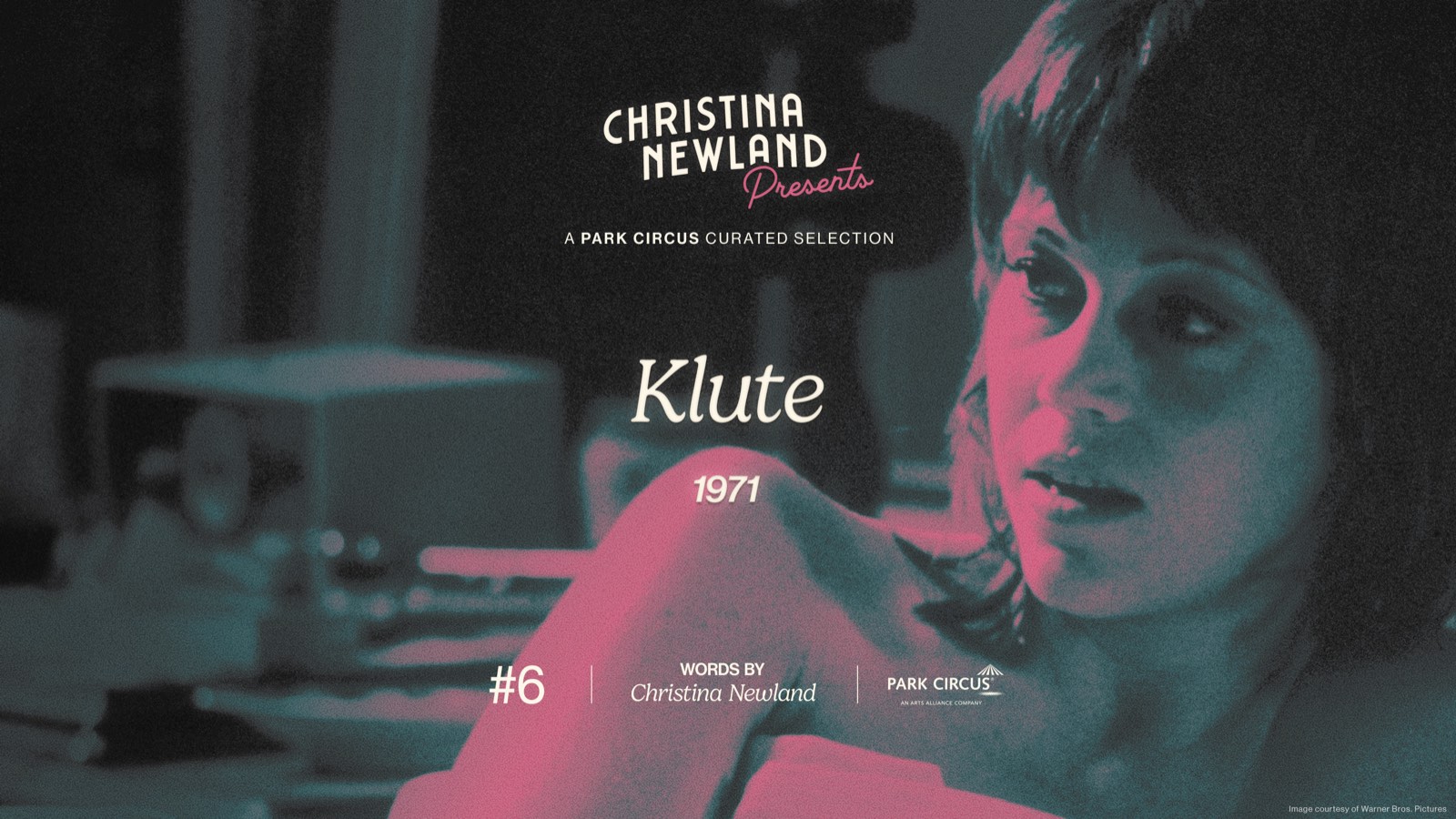
Christina Newland Presents: A Park Circus Curated Selection is a monthly curated collection of titles handpicked from the extensive Park Circus library by critic and journalist Christina Newland. All titles are available for theatrical screenings across the UK and Ireland courtesy of Park Circus. Bookings are complemented by newly commissioned programme notes fresh from Christina's desk, available in bespoke, print-friendly PDF for your audiences. Christina's pick for this month stars an Oscar®-winning Jane Fonda in Klute, the first of Alan J. Paklula's acclaimed "Paranoia Trilogy".
Recognised as one of the great thrillers of its era, Alan J. Pakula’s Klute is often spoken about for its spiky, moody depiction of an unravelling mystery, its au-courant Nixonian fascination with surveillance and subterfuge, and its Oscar®-winning performance from Jane Fonda as the call girl stuck at the centre of it all. And while it is a film from 1971, it also takes a surprisingly open-minded view on sex work. Written and directed by men and named not after its ostensible female protagonist Bree Daniels (Fonda) but for its taciturn male detective John Klute (Donald Sutherland), it still remains a progressive, darkly realistic exploration of female agency, sex, and independence.
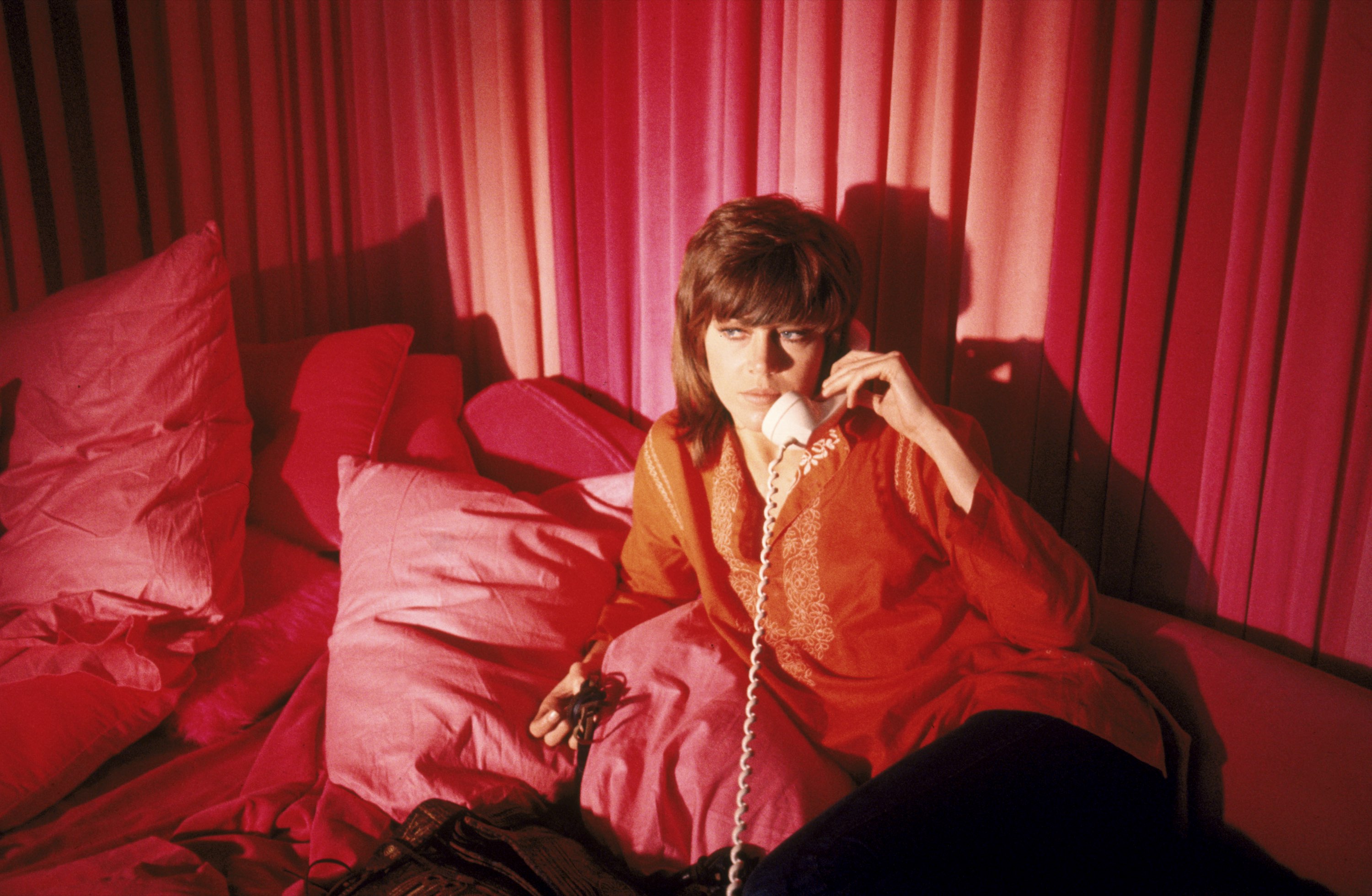
The film was the first of Pakula’s loose, so-called ‘paranoia’ trilogy, preceding The Parallax View (1974) and All The President’s Men (1976). Klute has the distinction of being the only one about a woman, and is a more ambiguous and intimate story than the others, with their more direct political ties. The film opens with a secretly-recorded telephone call between Bree, a NYC sex worker – and a nameless john. When Thomas Gruneman – an important businessman and former client of Bree’s – goes missing, a personal friend named Klute decides to follow the trail. Bree, in the meantime, has been haunted – seemingly stalked – by an unknown heavy-breathing caller who seems to be following her. Could it be Gruneman? Or is there another sinister force at work?
Fonda, as Bree, is dressed in fashionable wrap skirts, braless, carrying her groceries to her Manhattan walk-up and looking like any other attractive single woman in the city. She reads a book on astrology in bed, drinks wine and smokes a joint; sees a therapist. Her interior and solitary life is intentionally presented to the viewer, in ways which feel less about the central mystery as they do the genuine psychology of the character. Bree goes to casting calls for modelling and stage gigs, but her real work is turning the occasional trick. This focus on showing Bree’s interiority was influenced by Fonda’s determination to make her character a real person; she insisted that her character’s therapist be a woman, because Bree would never trust a man with her secrets.
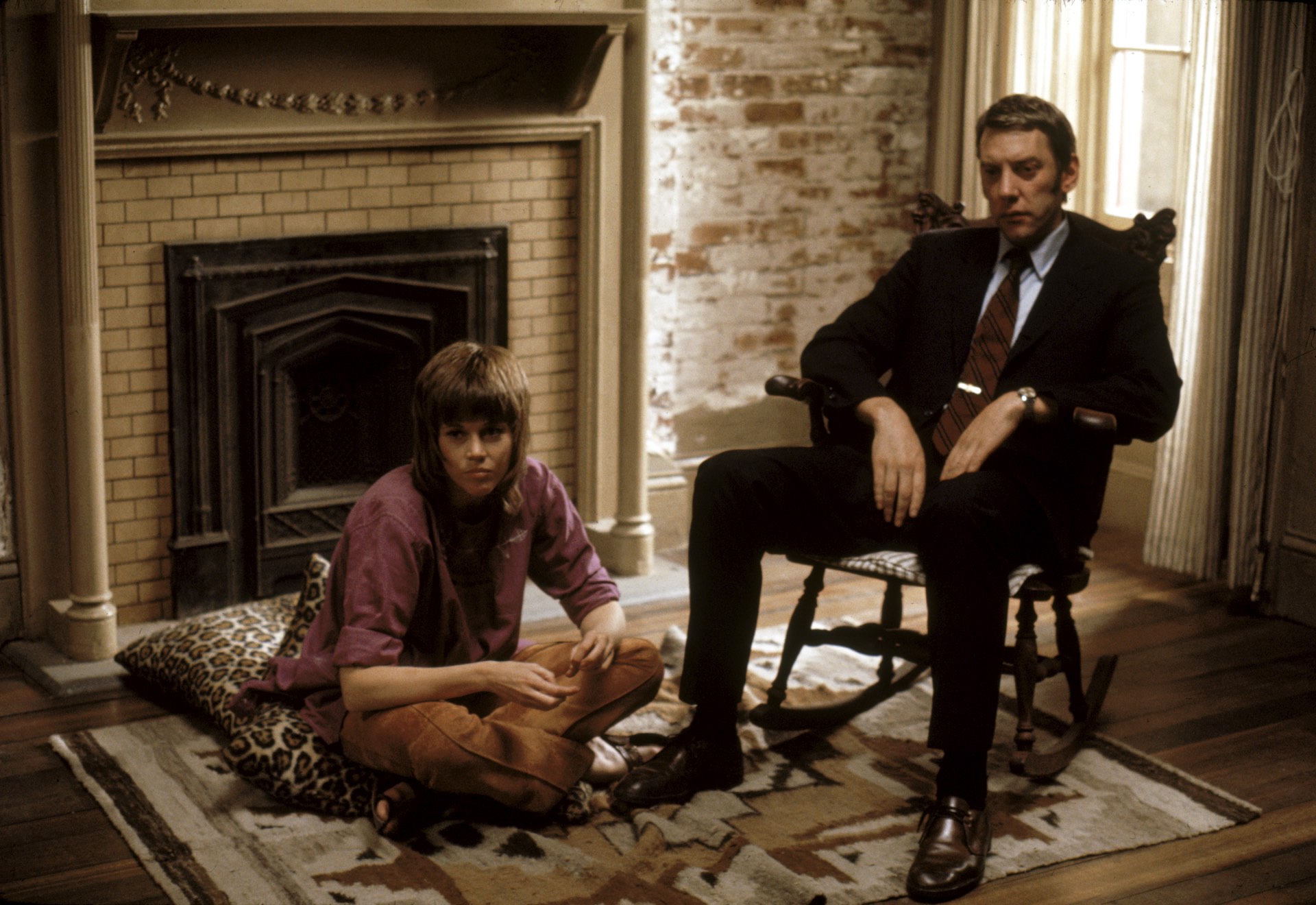
Klute would also be responsible for the emergence of Jane Fonda as a bonafide, serious actress of her radical-chic era – rather than a decorative nepo-baby icon of the one before, per Barbarella. The daughter of the universally-respected Henry Fonda could have rested on her upbringing as Hollywood royalty, and her beauty, in a period which prized bombshells over brains. Instead, she took on an un-glamourous role in the infamously downhearted They Shoot Horses, Don’t They (1969). And then, in 1971, she cut her blonde tresses into the chic, boxy brown bob of the film – her own hairstyle, which would become iconic as a result. When Pakula’s screenplay reached her, Fonda was uncertain. She spoke to her second-wave women’s lib friends about whether playing a sex worker could ever be feminist – the depiction of them onscreen in the past hardly gave her much hope. But she was encouraged to try something new with the role, with the chance of making it three-dimensional. She started hanging around street-walkers and madams to learn more, and was both surprised and sometimes saddened by what she saw. As Bree, she evinces a quiet bravado and sensuality, but there’s a brittleness to her. Whenever a john whispers something filthy in her ear, she gives a faux-rapturous response and then cannot hide a small, resigned grimace when he looks away.
Even beyond character, we see hints in Pakula’s filmmaking choices about the feminist underpinning of the film. In an early scene, Pakula frames a static shot of Bree seated in a chic waiting room with a line of other beautiful women, each being summarily dismissed by snooty would-be employers for a modelling gig. Judged quickly for their hands or their eye colour and then sent away while another group - this time all Black women - is ushered in, this cattle market is shown to be little different from sex work in the final analysis. Bree even tells this to her therapist, remarking that sex with every client is basically an acting performance, anyway. It’s a grim vision of the treatment of beautiful women with aspirations. And as Bree points out to her therapist, at least sex work gives her some control over her life.
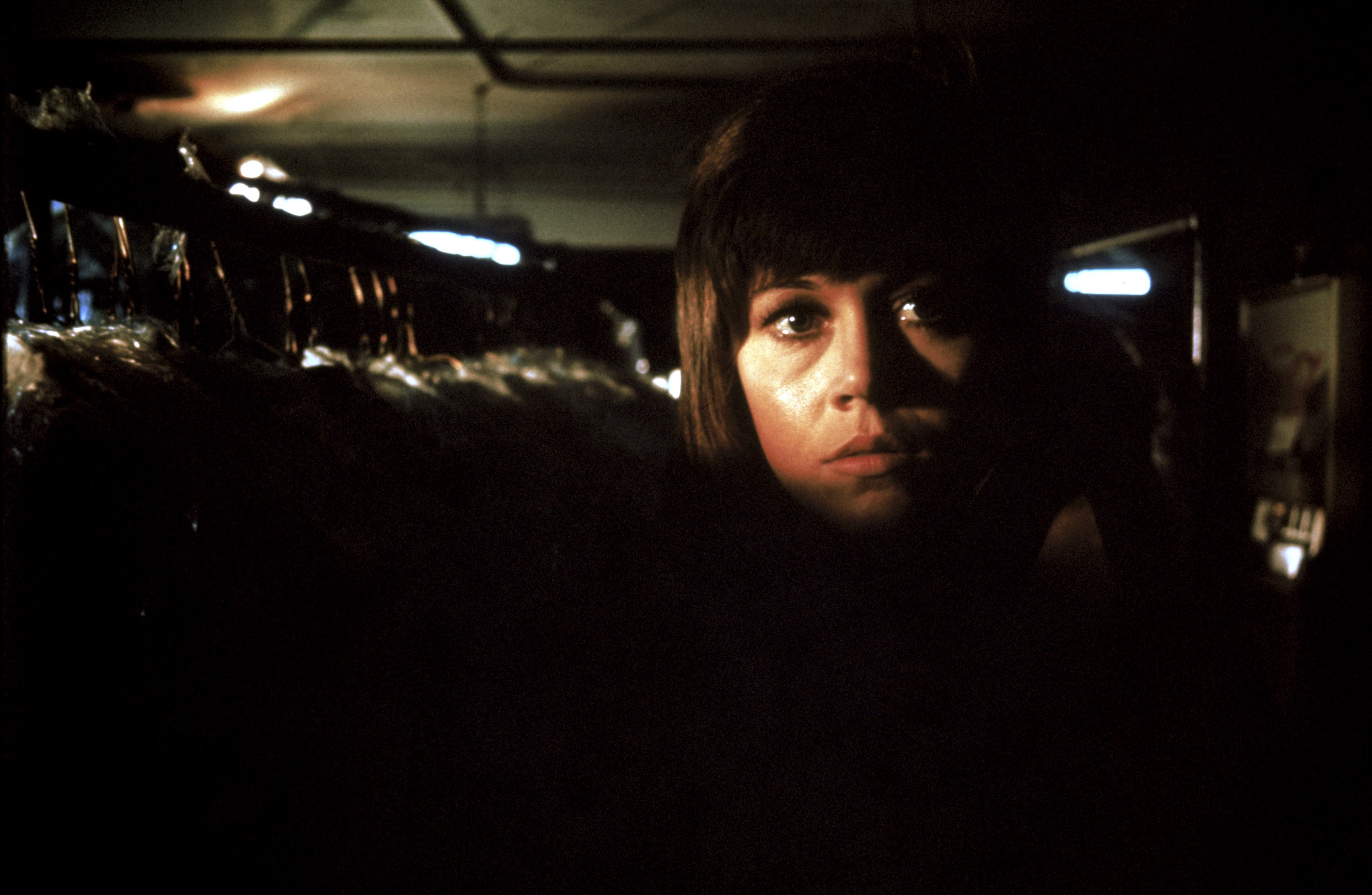
Gordon Willis, the painterly cinematographer of the Godfather films, spoke about heightening the visual tension of the film through vertical framing - tight and enclosed rather than wide and spacious. As he said: ‘Bree’s apartment should have been seen as if at the end of a long tunnel. I framed a lot of shots with the back of another character in front, to mask a part of the screen, or made use of other sombre surfaces as masks, in order to create this feeling of claustrophobia which reflects the life of this girl.’
This claustrophobia is all-encompassing in the film, which has the rhythm and feel of a person taking in and holding an anxious breath. Boxed-in by forces beyond her vision or control – and, more subtextually, by her own relationship to her sex work and the men in her life – Bree is increasingly trapped. When she and Klute begin a genuine affair, she resists: vulnerability is not a good idea for a woman in her position, especially given her previous associates in the trade keep ending up mysteriously dead. When the real killer is eventually revealed, it matters less that the threat has vanished than it does what Bree – and Klute – are going to do with their newfound peace. Bree claims to her therapist in voiceover she’ll leave New York, could never stay with Klute permanently; meanwhile we see them appear to pack up and free themselves of her apartment forever. Hinging on this gap between control and powerlessness – independence and love – the film concludes. The eternal question for women then, and perhaps now: what do you sacrifice – to men, to others – to find a sense of power in your life? And is it worth it?
Fonda was already known for her outspoken anti-war and leftist politics, but Klute would mark the start of a period of great ambition and heroism in her career. A glittering decade of film roles would await, and she would continue to carry the feminist consciousness-raising of her generation onward – still embodying those values today.
Klute is available for theatrical bookings on a restored 2K DCP courtesy of Park Circus, with Christina's notes provided in bespoke, print-friendly PDF. Klute is also part of a new 'Trust No-One' cost-effective DCP combo drive available in the UK & Ireland, alongside All The President's Men (50th anniversary, new 4K restoration), The Parallax View, The Anderson Tapes and The Conversation.
Get in touch to book now, and bookmark our Christina Newland Presents collection for monthly updates.
Christina Newland is the lead film critic at the i paper and a journalist on film, pop culture, and boxing at VICE, Criterion, Sight & Sound, BBC, MUBI, Empire, and others. Find her on X (formerly Twitter) at @christinalefou.