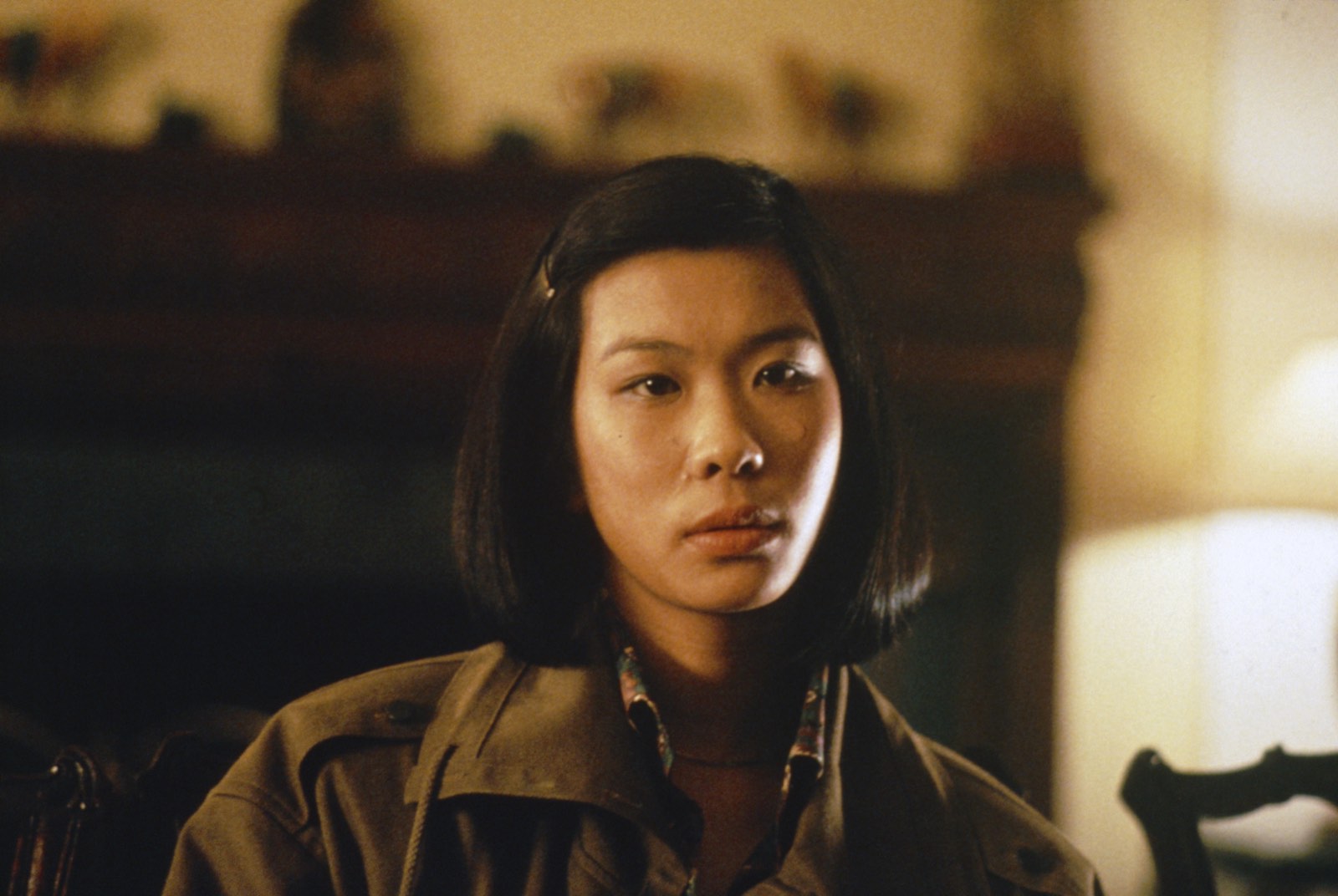
Ahead of Lunar New Year, Park Circus is proud to be bringing Channel 4's Ping Pong back to the big screen. To celebrate the re-release, Katie Smith-Wong takes us back to London's Chinatown in the '80s in search of the quiet cultural legacy behind a pioneering British-Chinese film.
A quirky combination of noir, comedy and drama, Po-Chih Leong’s Ping Pong quietly holds a number of firsts in British filmmaking. It is the first film to be shot in London’s iconic Chinatown. It is the first film shot in the UK by British-born Chinese director Leong (whose previous projects were based in Hong Kong). Lastly, it is the first British-Chinese production. Despite its ground-breaking status in British cinema and premiering at the 1986 Venice Film Festival, Ping Pong seems to have faded into the background - but there is no reason why it should stay there.
The beauty of Ping Pong lies is its depiction of a perspective on Asian culture through a Westerner’s eyes - in this case, an unlikely protagonist in the form of law student Elaine Choi. Played by Lucy Sheen (in her debut role - marking another first), Elaine may be a Chinese woman having immigrated from Macau when she was seven, but when she is tasked with executing the will of the late restaurateur Sam Wong, her dilemma is immediate - it is a will that she, in her own words, “cannot read”. From the outset, her lack of familiarity with the customs and language of her homeland not only ostracises her from the Wong family but also draws attention to the film’s prominent theme of cultural identity.
Set in the hubbub of Chinatown, the film sees Elaine bouncing between each member of the Wong family like the eponymous ping-pong ball in her quest to validate Sam’s will. Her intrepid quest sees her act as a reluctant middle-woman between each relative yet exposes her to the patriarchal stance of a culture unfamiliar to her.
The spectrum of approaches towards Chinese culture highlights the diverse Chinese diaspora in London. While more recent Asian-led narratives such as Crazy Rich Asians and Return to Seoul integrate a “fish out of water” angle as a key plot element, Ping Pong brings a refreshing honesty to London’s British Chinese citizens. No-one is subjected to sinophobic treatment while representing different working classes, so Leong builds a world where Chinese people are an integral part of British society. However, the director goes a step further to boldly show that even excessive gamblers and bootleg video sellers are part of this world, bringing to light parts of the culture that others may want to hide while others cannot ignore.
Meanwhile, the cultural clash between East and West is personified by Sam Wong’s sons, with the eldest Michael (David Yip) now bearing the responsibility of being the head of the Wongs. While he and brother Alan (Ric Young) have reaped the benefits of private education and a comfortable lifestyle, they have steered away from convention, their aforementioned responsibilities, and more specifically, their elders, for a Western way of life. Michael refuses to take over his father’s traditional Chinese restaurant to run an upscale Italian eatery, while Alan is expecting a baby with his Caucasian wife. Their quiet defiance to their father’s wishes contrast with their grieving mother and hardworking sister and brother-in-law, who remain faithful to Sam’s wishes as per the Chinese tradition of filial piety.
Despite the underlying patriarchal stance of the film, Leong also uses Ping Pong to distinguish why Elaine’s presence is essential in both the narrative and among the ensemble of eclectic characters. Her fluency in English allows her clients to better understand the British legal system, her straightforward demeanour provides stability among the warring Wongs, yet she avoids caving into racial stereotypes of yesteryear. Sheen’s portrayal of a modern British-Chinese woman allows a more seamless assimilation of such characters into British media as resonate British-Chinese characters in the 1980s was unheard of - Yip himself became the first Asian male lead of a British TV show only a few years before the release of Ping Pong with TV drama The Chinese Detective - so it can be easy to disregard Sheen’s performance as somewhat conventional, when it is actually disruptive.
But despite Leong’s seminal work, Ping Pong has faded into obscurity and with it, so has a prime opportunity to promote diversity in British filmmaking. As we now see Asian stars taking over Hollywood in both acting and filmmaking roles, the UK film industry is always one step behind in recognising diverse talent. In addition, notable British film award ceremonies have been criticised for not awarding major prizes to nominees of colour (where The Banshees of Inishiren, Tár, and All Quiet on the Western Front were awarded over eventual Academy Award® winner Everything Everywhere All at Once). This points to the idea that Asians have never felt represented in a country that, according to the 2021 Census, 445,646 Chinese people call home – but Ping Pong shows that British-Chinese people do belong.
Ping Pong is back in cinemas across the UK and Ireland from 9 February in time for Lunar New Year. Find a screening here or get in touch for theatrical bookings (screeners available).
Katie Smith-Wong is a Rotten Tomatoes-approved freelance writer and review editor at Flickfeast. Find her on X (formerly Twitter): @KatieSmithWong.
Download a PDF version of these programme notes here.